Diverter Valves
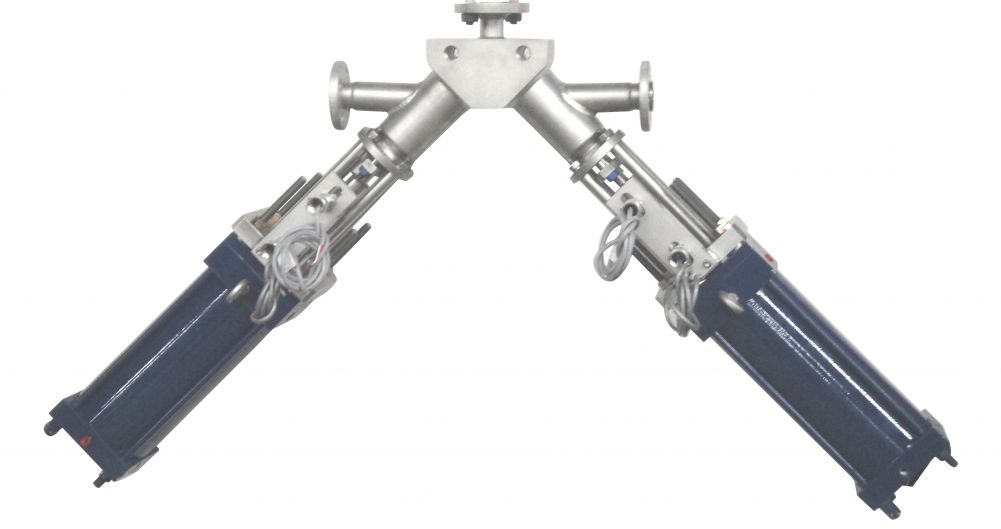
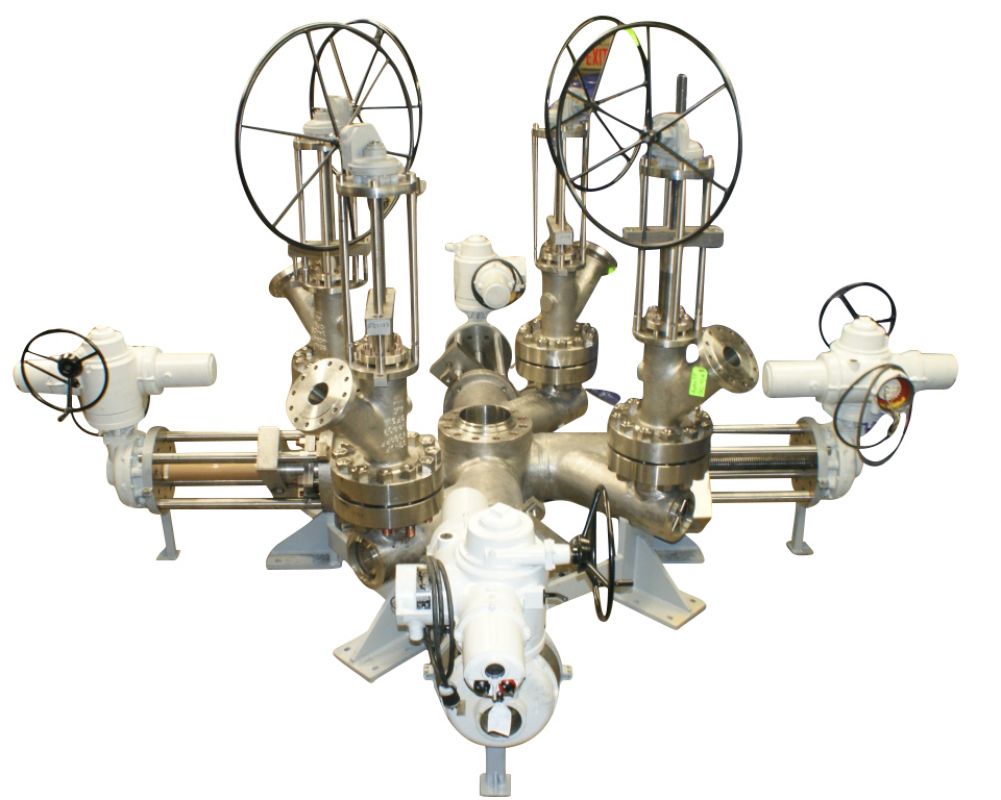
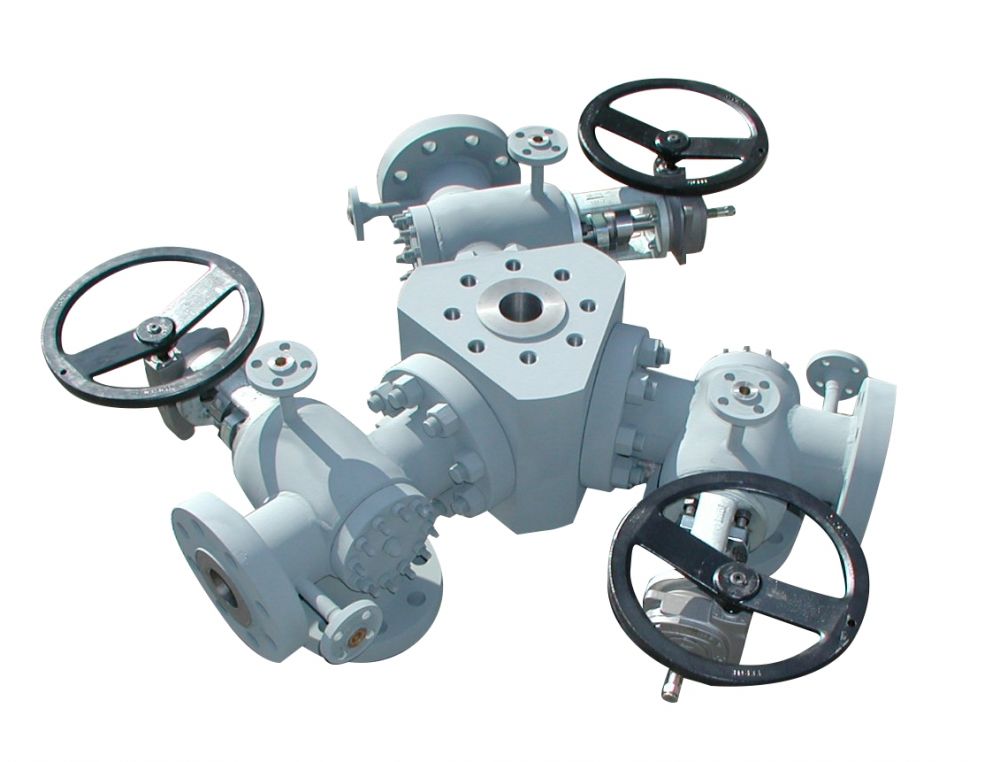
Diverter valves split, switch, combine or isolate process media in to one or more directions, all the while eliminating dead space. Diverter valves are sometimes called switching valves, polymer diverter valve, 3-way, 4- way, and multiway diverter valves or combination valves.
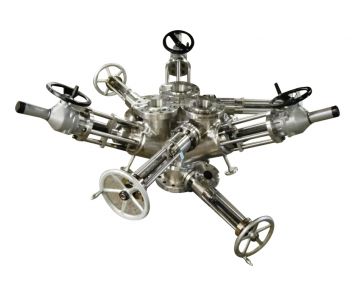
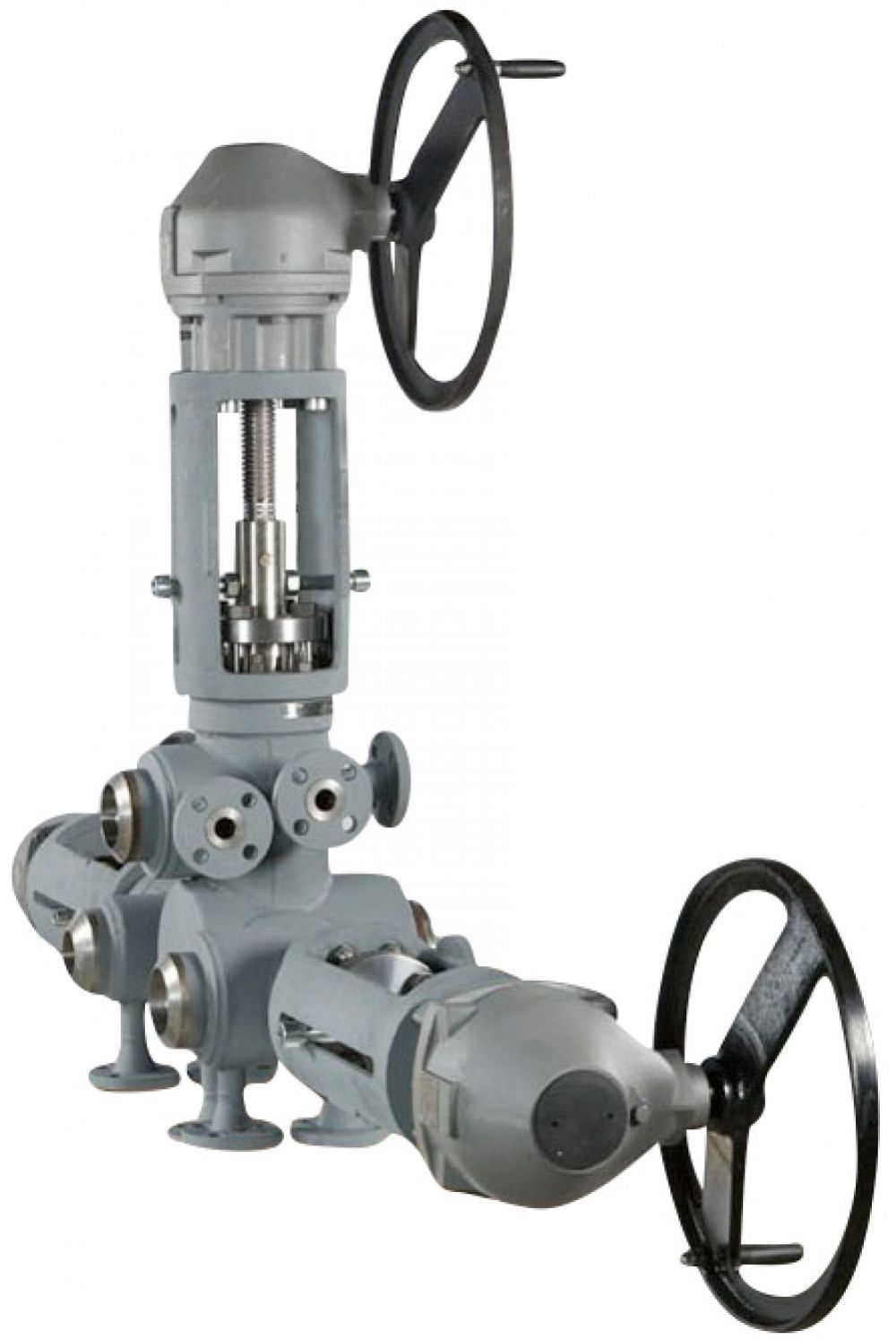
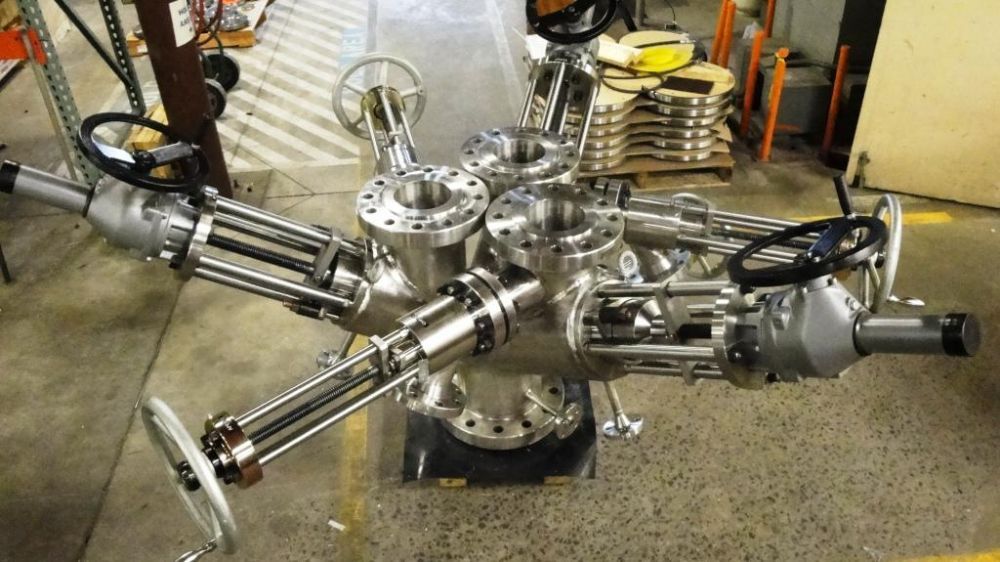
5 Way Diverter Valve for Heavy Oil Upgrading
Diverter Valve Application
Diverter valves are primarily used to split or combine process flows between different pieces of process equipment such as pipeline, filters, spinning heads or pumps. The second major use is to replace the traditional approach of splitting media by using a T-Piece and two isolation valves. The more compact diverter valve solution has the added benefit of eliminating dead or slow spaces that are self evident in t-pieces and ball valves for example. The avoidance of dead space in turn reduces the requirement to backflush (please see more details in the Concept area below).
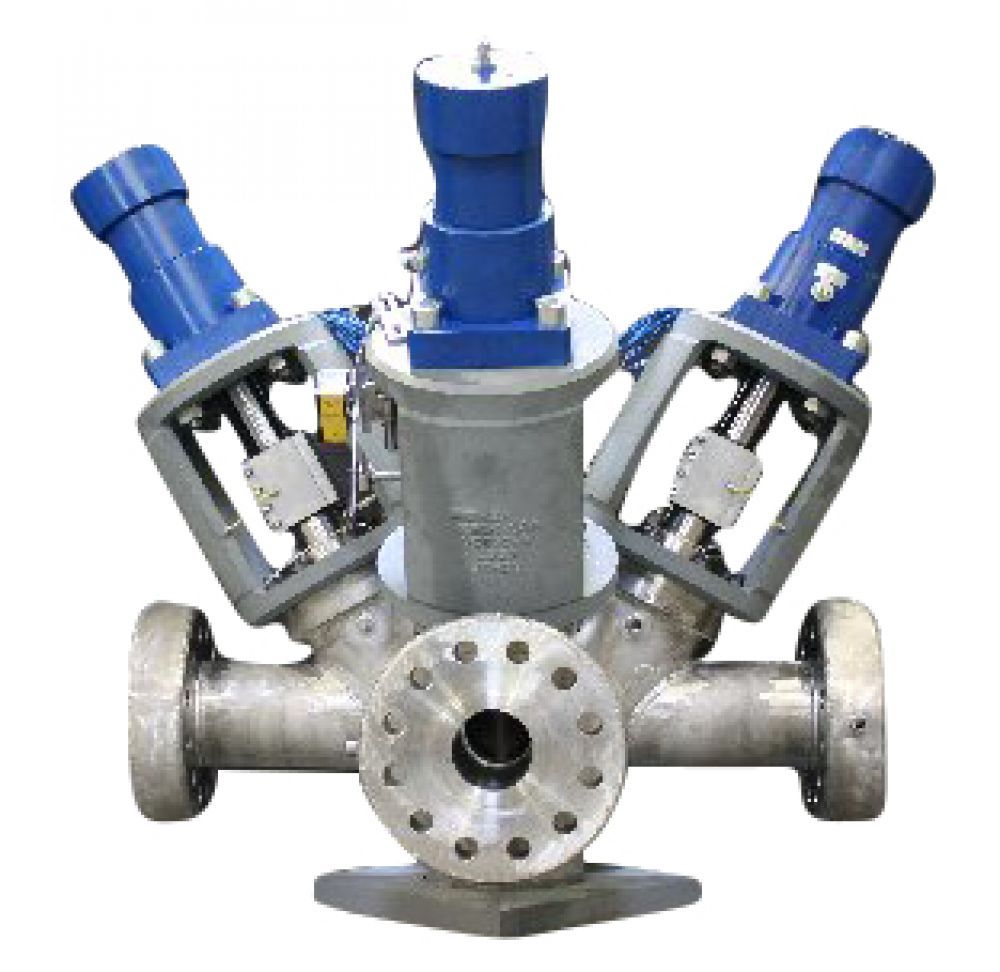
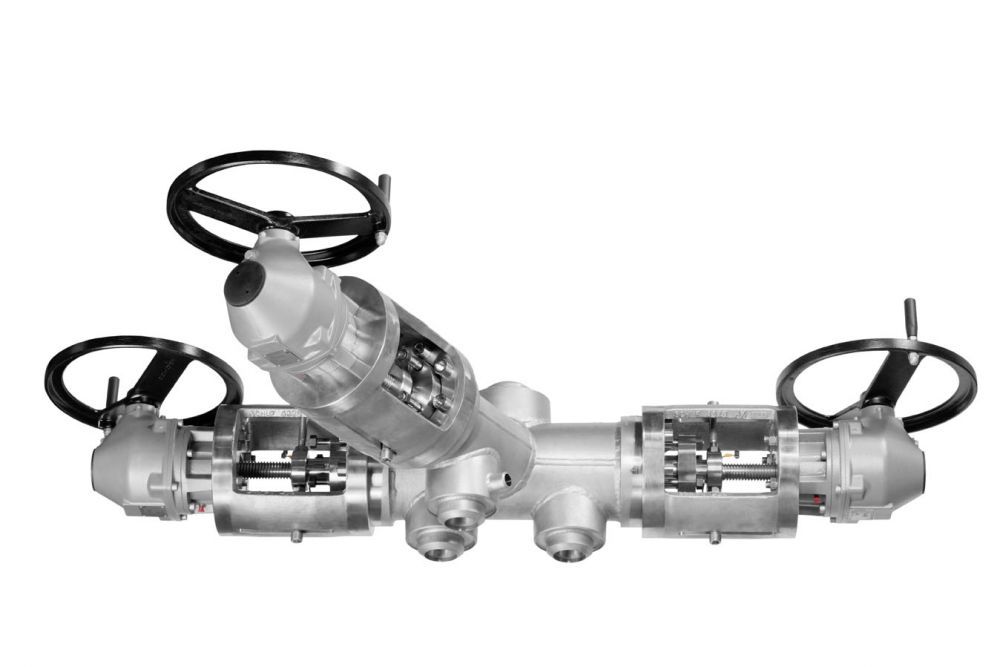
Diverter valves can be custom made to meet even the most challenging piping layout requirements. A 3-way diverter valve can for example have 1 inlet and two outlets, or two inlets and one outlet. With multiway diverter valves, the combinations are endless, but they are primarily used to eliminate multiple isolation valves, t-pieces and unnecessary piping. They can therefore be used to achieve a more compact plant layout in either a new or existing plant.
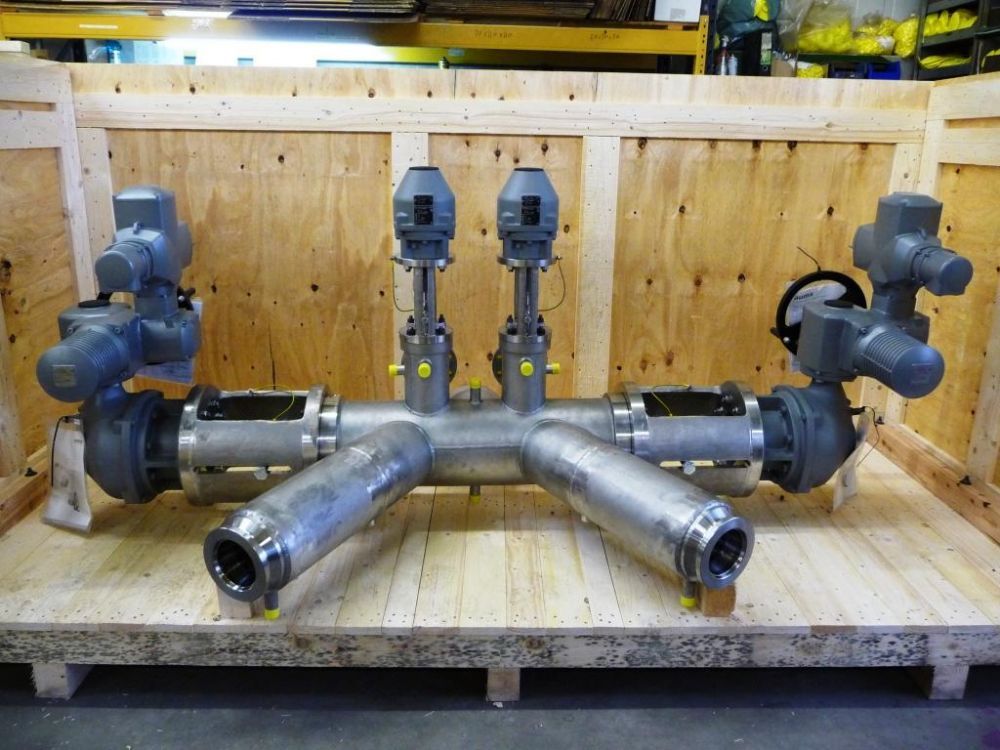
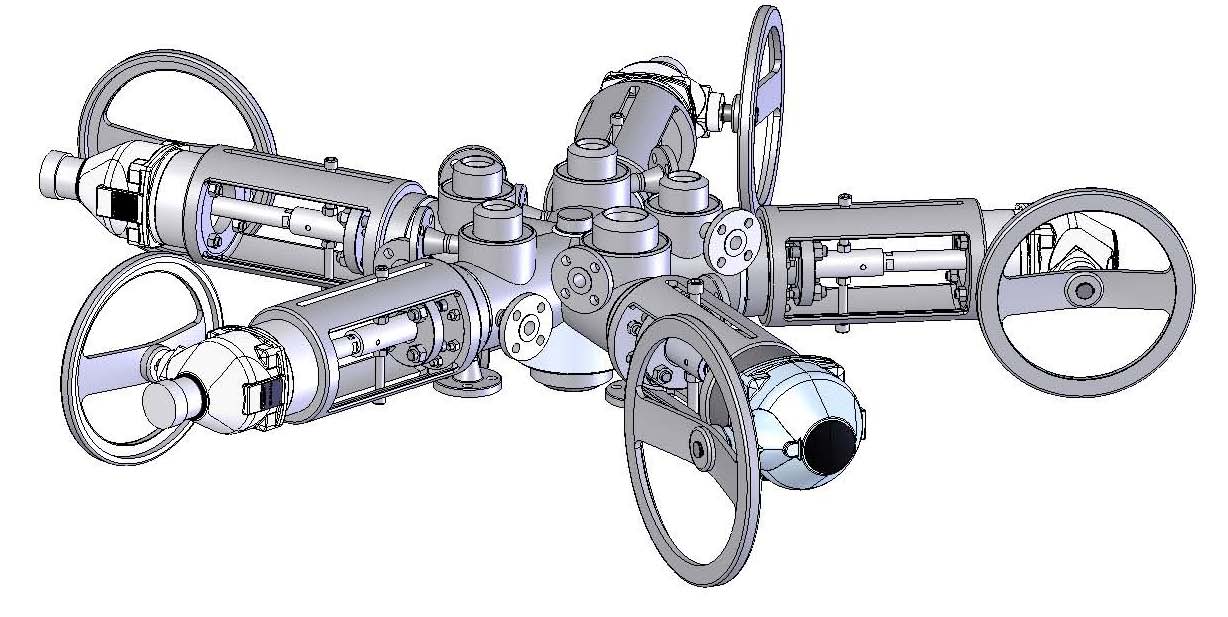
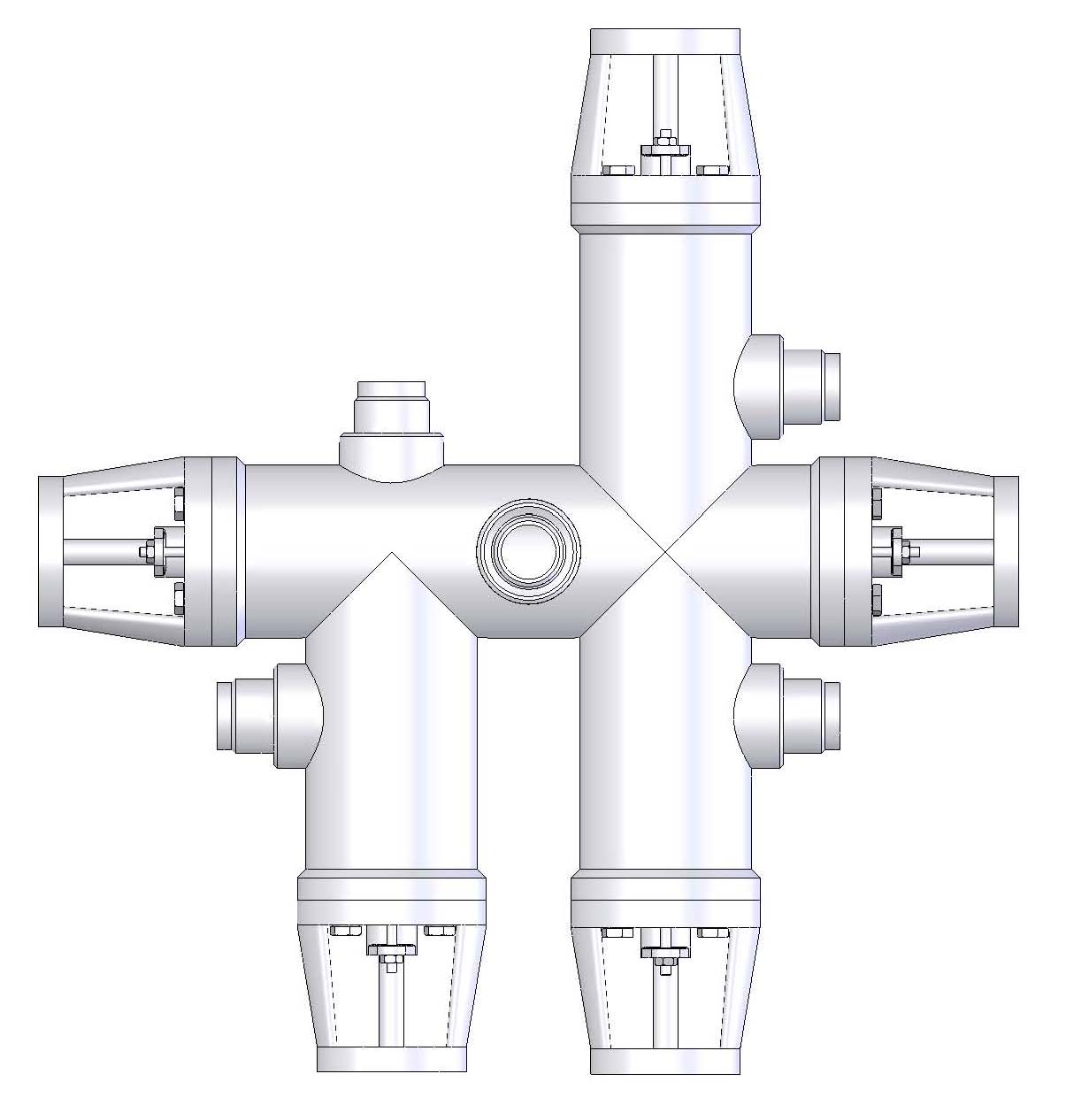
Another example of a 5-way diverter valve is with one inlet and four outlets. Each outlet is connected to a different pump and in this way different process lines can be fed media consecutively, or one taken offline for maintenance whilst another is running.
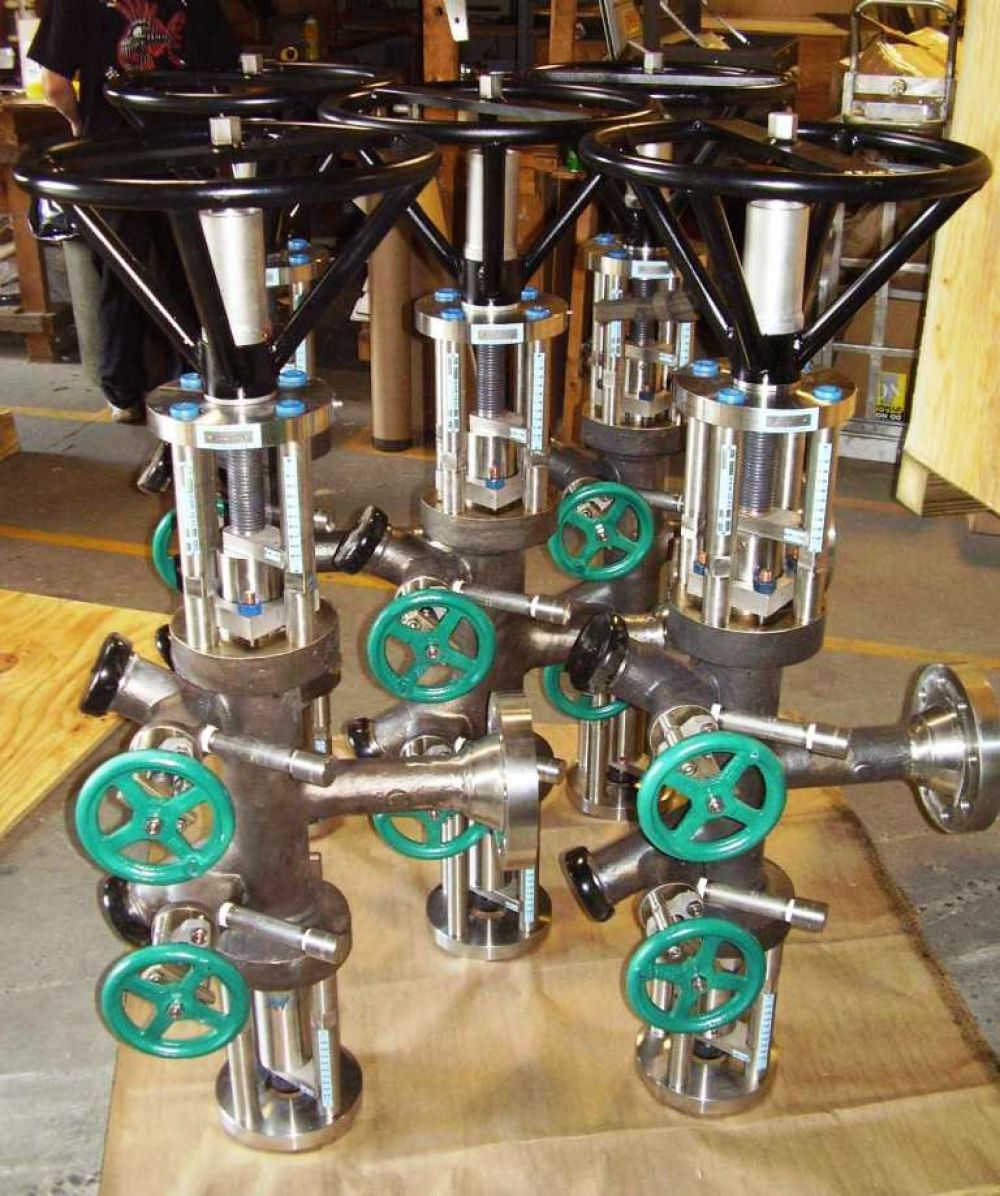
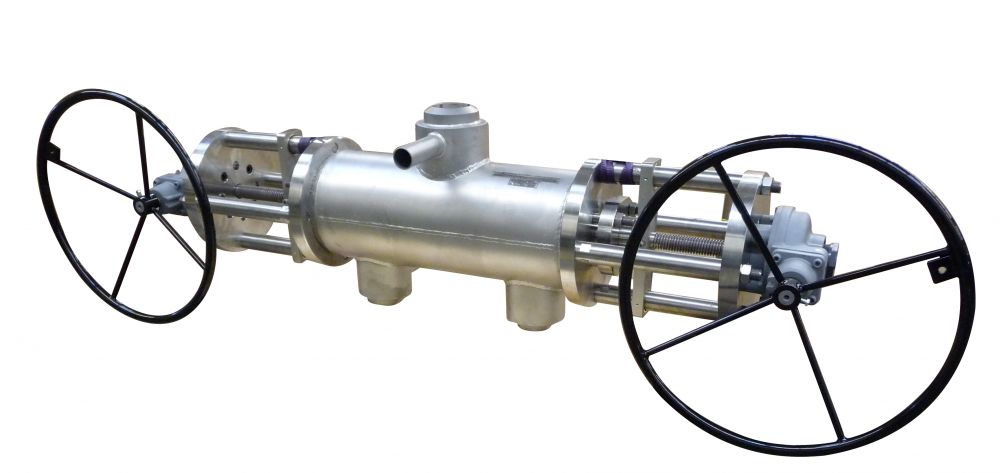
They can operate under severe operating conditions with high flow rates, high pressure and temperature. There are many options available such as rotating and contoured plungers, heating jackets and integrated flushing. You can see many different examples of these diverter or switching valves in the photo section below.
Operation
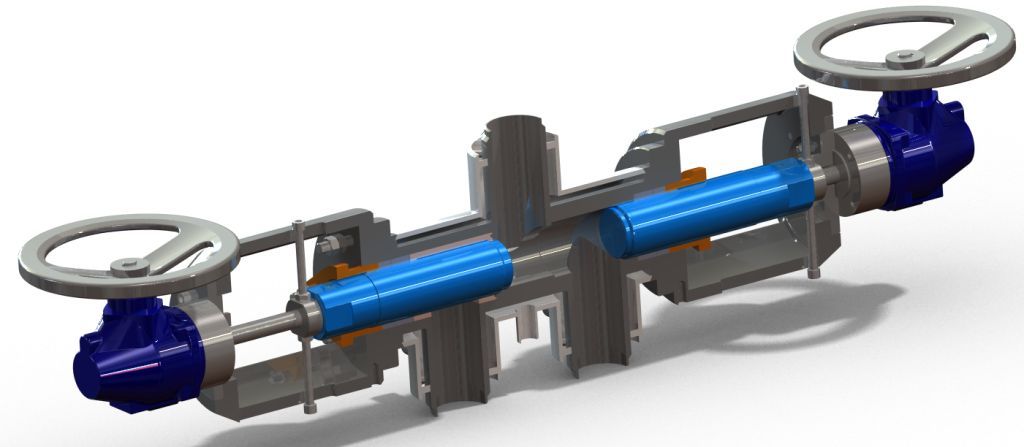
Diverter valves operate by actuating pistons inside a valve body, to divert fluid flow as needed. When one piston is actuated to the closed position, it creates a seal against the body, thereby stopping all flow through one port of the polymer diverter valve. When the piston is actuated to the open position, fluid is allowed to flow from the inlet to the outlet in a smooth, unimpeded manner.
All types of actuation are available - manual, electric, pneumatic and hydraulic. By utilizing a plunger-style seal, dead space within the valve body is minimized while ensuring a Class VI seal.
The valve design can be optimized by contouring and rotating the plungers. This helps keep the fluid flow smooth and unobstructed, while also reducing dead space inside the valve body. Furthermore, a heating jacket can be added to fully encompass the Diverter valve body, allowing the fluid to remain completely heated while flowing through the valve.
Features
- 2, 3, 4 or multiway body configurations
- Extremely compact design; one valve body requires much less room than multiple isolation valves and T piece approach
- Dead Space Free; no room for any solid particles to gather
- 100% Leak Tight; Class VI Seal
- Highly customizable; valve can be designed to meet all required dimensions and configurations
- Lower Cost
- Reduced Flow Switching Time; flow can be switched in a matter of minutes
- Smooth Flow Path; all designs optimized for minimal flow disruption
Options
| Standard | Optional | |
|---|---|---|
| Size | 1" to 18" as standard | Larger as per requirement |
| Body | Stainless Steel 1.4408 (CF-8M) or 1.4571 (316 Ti) | Carbon Steel, 304, 316L, Duplex, Alloy 276 Monel, Titanium, Nickel, Inconel, Incoloy etc. |
| Lining | n/a | PTFE, glass, ceramic or rubber |
| Inlet | Perpendicular to body | Inlet larger than outlet; off-set to body; bi-directional inlet/outlet; same size inlet/outlet |
| Outlet | 45, 60 or 90 degrees | Angle per customer requirement |
| Seat | Integrated seat (hard faced) | Replaceable seat, sleeve or ring |
| Seal to atmosphere | Stuffing box | Fully enclosed yoke or custom design |
| Pressure Range | Up to ASME 2500# (PN 320) | Higher on request |
| Actuators | Manual, hydraulic or electric | Pneumatic |
| Heating Jacket | n/a | Full or semi jacketed |
| Control Characteristics | On/Off - Straight or contoured piston | Linear, equal % or SchuF gap control |
| Add-ons | Flushing ports | Integral drain or sampling valve(s); mechanical lock |
| Connection types | Butt weld end or flanged | Clamp type |
Body Patterns
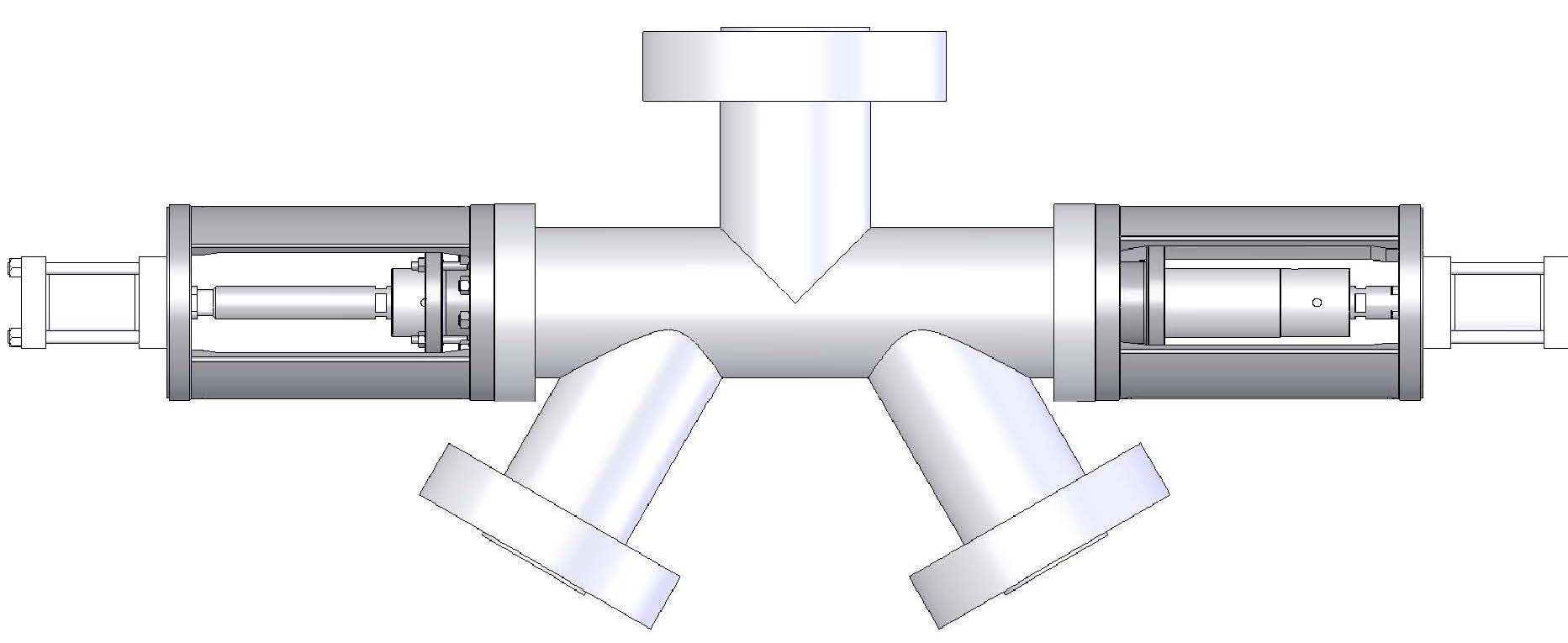
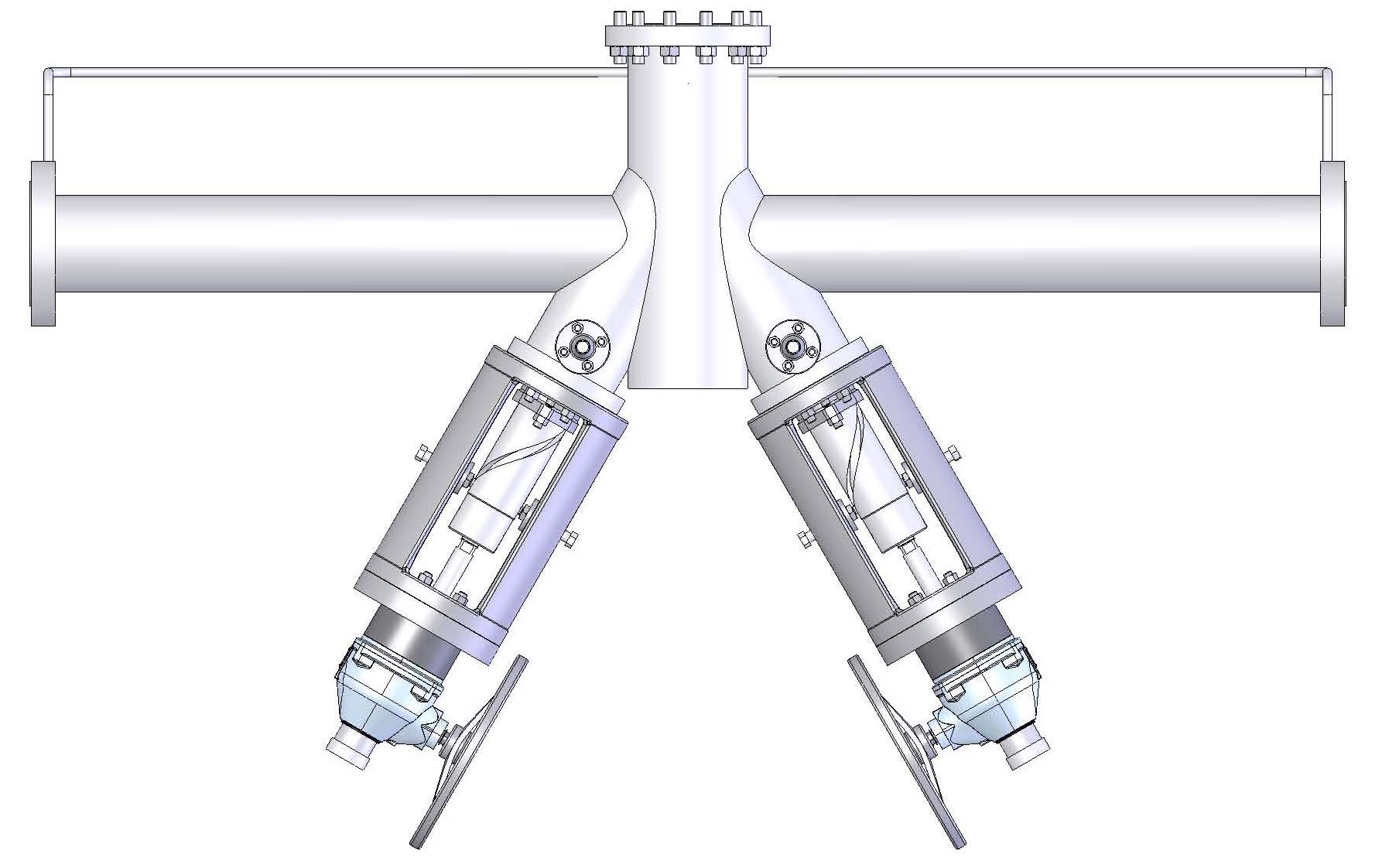
Diverter valves are highly customisable valves. They can have any combination of inlet and outlet branches and each branch can be positioned to meet piping requirements. Flow can be in one direction, bi-directional, or throttled according to process parameters. The below diagrams give an overview of the more standard body patterns:
Benefits
- Diverter valves eliminate dead space and thereby:
- protect product quality
- reduce maintenance
- eliminate backflushing
- Reduce footprint required for multiple valves and complex piping
- Increase efficiency through faster switching time
- Enable a greater degree of flow control
- Reduce operational and capital cost by integrating multiple valve process functions in one valve
- Improved product quality
Applications
- To split one large process line into many smaller lines
- To replace several isolation valves and T-pieces in order to eliminate back flushing of dead spaces
- To keep one line in service while maintaining another
- Switching between filters, without downtime or pressure and flow variations
- For high viscosity media, where dead or slow spaces lead to poor product quality
- To combine a process isolation and a start up dump valve in one valve body
- Where space does not permit larger valves or extensive piping
- To integrate multiple valve process functions into one valve